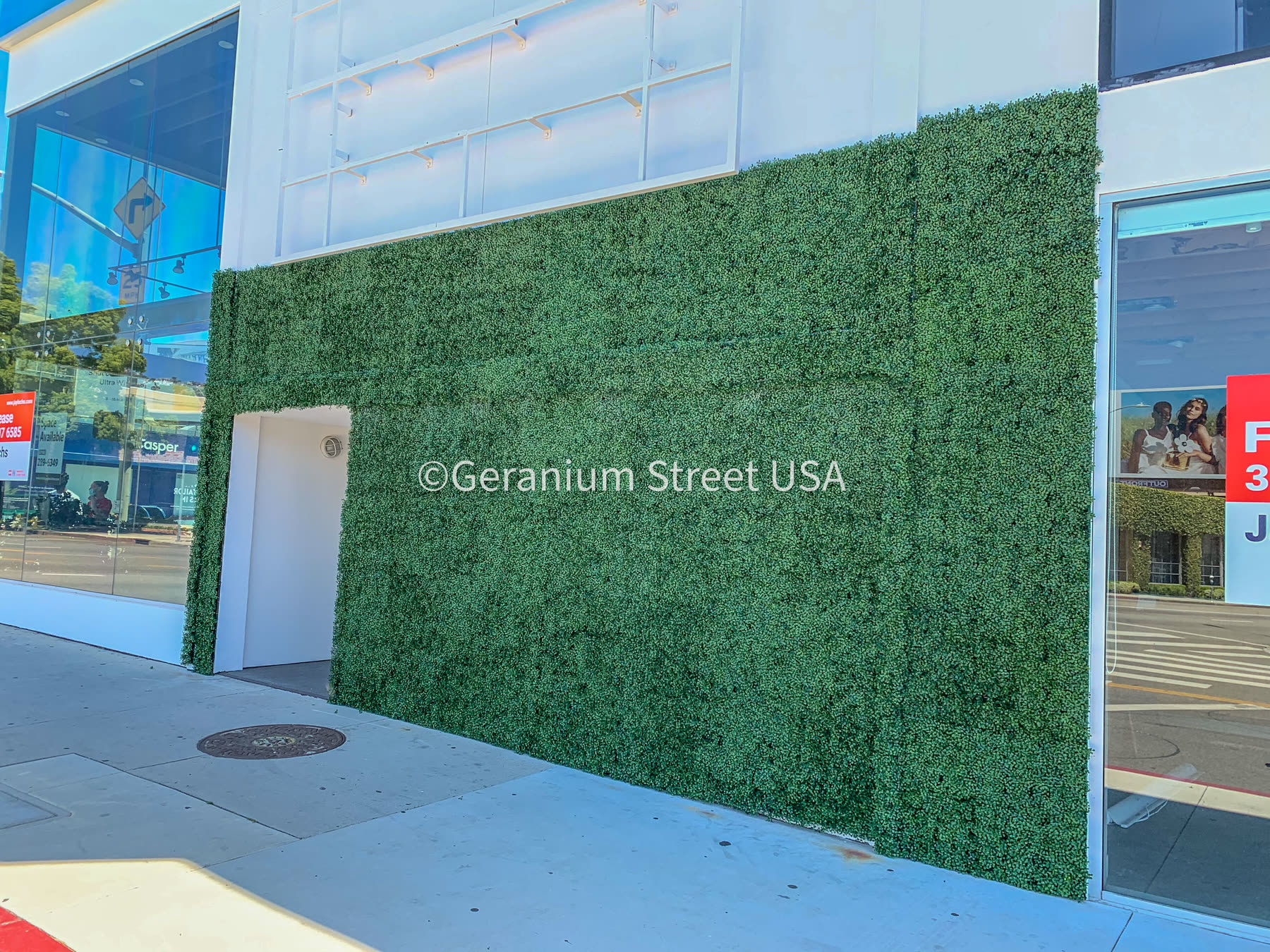
Hotels are one of the most demanding environments for any decorative material. The space is occupied around the clock, guests interact with surfaces constantly, housekeeping runs on a daily schedule, and the design has to work simultaneously as a business asset, a marketing tool, and a code-compliant installation.
Artificial greenery—living walls, hedge panels, and accent installations—has become a standard element in Texas hospitality design. The visual appeal is obvious: it creates lush, photogenic spaces without the irrigation, pest control, and plant replacement costs that live greenery demands. But in a hotel, the design conversation can't be separated from the compliance conversation.
Planning a similar project? See artificial living wall installs →.
This article covers both: where artificial greenery creates the most value in hotel environments, and how to keep it compliant with fire codes.
Where hotels use artificial greenery
Lobby and entrance
The lobby is the hotel's first impression. A living wall behind the front desk, flanking the entrance, or defining a seating area creates an immediate sense of quality and care.
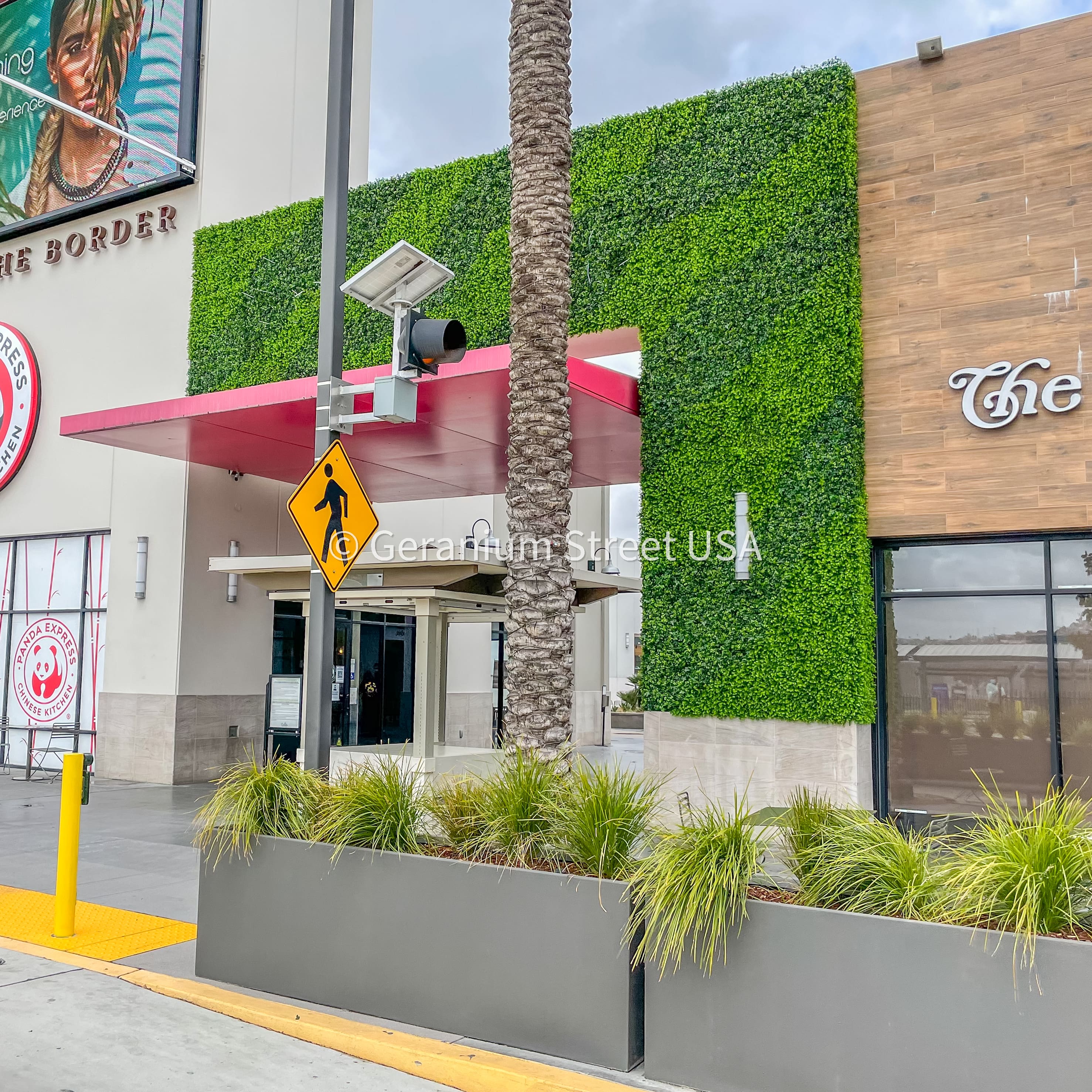
Design considerations for lobby walls:
- Foliage density and variety matter most here. Guests walk past the wall at close range. Mixed foliage with varied textures, depths, and leaf sizes reads as intentional design. Flat, uniform panels look cheap up close.
- Lighting is critical. Warm LED uplighting or wall-washing fixtures make the foliage look rich and three-dimensional. The lobby is often lit differently at different times of day—make sure the wall looks good under all lighting conditions.
- Brand integration. Some hotels incorporate signage, logos, or branded elements within the living wall. This works when done subtly—a metal logo mounted on the foliage, for example. It fails when it looks like a billboard.
Pool deck and courtyard
Hotel pool areas face the same conditions as residential pools—reflected UV, chlorine mist, splashing, and heat—but with higher traffic and higher expectations.
Artificial hedges around the pool provide privacy screening between the pool and adjacent properties or parking areas. Living walls create photo-worthy backdrops for the lounge area. Equipment screening (pumps, filters, heaters) keeps the pool deck looking clean.
For pool-specific guidance, see our pool privacy guide.
Restaurant and bar areas
Hotel restaurants and bars fall under assembly occupancy (Group A-2), which triggers the most stringent fire code requirements for interior finishes and decorative materials. A living wall in a hotel restaurant serves the same design function as in a standalone restaurant—backdrop, ambiance, photography—but the code requirements are non-negotiable.
For restaurant-specific considerations, see our restaurant patio guide.
Event and meeting spaces
Ballrooms, meeting rooms, and event spaces use artificial greenery as backdrops, photo walls, stage dressing, and room dividers. The advantage over live greenery is consistency: the wall looks the same for a Tuesday morning corporate meeting as it does for a Saturday evening wedding.
For event spaces, consider modular installations that can be reconfigured for different setups. Freestanding hedge walls on wheeled frames give maximum flexibility.
Hallways and transition spaces
Long hotel corridors benefit from greenery to break up the monotony. A living wall panel at hallway intersections, elevator lobbies, or floor transitions creates visual landmarks that help with wayfinding and make the space feel less institutional.
Exterior and porte-cochere
The hotel entrance—the porte-cochere or drop-off area—is where the guest experience begins. Hedge panels screening service areas, living wall accents flanking the entrance, or greenery on the valet area fence create a finished, curated arrival experience.
Fire code requirements for hotels
Planning a similar project?
Use these next pages while you read
They cover pricing, service details, and the next planning step without making you leave the article blind.
Hotels contain multiple occupancy types within a single building, and each area may face different fire code requirements:
Guest room floors (R-1 residential): The IBC classifies hotel guest rooms as R-1 residential occupancy. Hallways serving guest rooms are considered egress paths and face interior finish requirements.
Lobbies and common areas: Typically classified based on the primary use. A lobby that functions as a lounge or gathering space may be classified as assembly.
Restaurants and bars (A-2 assembly): The most stringent category for decorative materials. Fire-rated products are commonly required.
Meeting and event spaces (A assembly): Same scrutiny as restaurants for decorative materials.
Pool areas: If the pool area is covered or enclosed, it may be classified as an interior space for fire code purposes. Open-air pools face less scrutiny.
What to specify
For hotel projects, the safest approach is to specify fire-rated products throughout:
- NFPA 701 Method 2 tested products for decorative applications (living walls, hedge panels, accent greenery)
- Documentation that names the specific product, not a generic sample
- Test reports from accredited laboratories
This approach eliminates the variability of local enforcement. Whether the AHJ is strict or lenient, you have documentation that covers you.
For the technical details on fire standards, see our NFPA 701 vs ASTM E84 guide. For broader compliance guidance, see our fire-rated greenery guide for commercial properties.
Durability in a hotel environment
Hotels are harder on decor than most commercial environments:
24/7 occupancy. The spaces are used continuously, not just during business hours.
Guest contact. People lean against walls, touch surfaces, brush past with luggage. Panels in guest-contact areas take physical wear.
Housekeeping schedules. Cleaning crews work on tight schedules. The greenery needs to be easy to clean quickly and resilient enough to handle cleaning chemicals used in hospitality environments.
Events and turnover. Event spaces get reconfigured regularly. Decorative elements need to withstand bumps from furniture, equipment, and setup crews.
What holds up
- Sturdy backing grids that resist flex and impact
- Resilient foliage that springs back after contact
- Secure mounting that doesn't loosen with vibration from nearby foot traffic
- Panels positioned above direct-contact zones where possible—mounting the bottom edge of a living wall above luggage-cart height, for example
Cleaning schedule for hotels
- Monthly for high-traffic areas (lobby, restaurant, pool)
- Quarterly for lower-traffic areas (hallways, meeting rooms)
- After events if the greenery is near catering, bars, or cooking areas
- Use mild soap and water. Avoid the industrial cleaners used on hard surfaces—these can damage polymer foliage.
Working with hotel designers and brand standards
If you're working with a hotel management company or brand, the artificial greenery needs to align with their design standards. Some brands have specific requirements for:
- Material types and fire ratings
- Color palettes (some brands restrict accent colors)
- Approved vendor lists
- Maintenance protocols
Get the brand standards document early and verify that the products you're specifying meet their requirements before ordering.
Related articles
This article is part of our fire-rated artificial greenery guide for Texas commercial properties, which covers standards, documentation, and procurement.
You might also find these useful:
- Texas fire code requirements for artificial plants in commercial buildings
- Artificial greenery ROI for multifamily property managers
For commercial products, see our commercial living wall page, fire-rated hedge page, or Vallum FRX system.
FAQ
Do hotels need fire-rated artificial greenery?
In most cases, yes—particularly in interior spaces. Hotels contain multiple occupancy types: R-1 (residential) for guest rooms, A-2 (assembly) for restaurants and bars, and B (business) for meeting rooms. Lobbies, common areas, and assembly spaces face the strictest fire code requirements for decorative materials. Check with your local AHJ for specific requirements.
What areas of a hotel benefit most from artificial greenery?
The highest-impact locations are the lobby and entrance, pool deck and courtyard, restaurant and bar areas, event spaces, and hallway transitions between public and private areas. These are the spaces where guests form impressions, take photos, and spend the most time outside their rooms.
How durable is artificial greenery in a hotel environment?
Hotels are harder on decor than most environments because of 24/7 guest traffic, housekeeping schedules, and frequent events. Quality panels handle this well, but plan for more frequent cleaning (monthly in high-traffic areas) and position panels where they will not be directly impacted by luggage carts, service equipment, or heavy foot traffic.
Can artificial greenery be used for hotel event spaces?
Yes. Artificial living walls and hedge panels work well as event backdrops, photo walls, and space dividers. For events in assembly-classified spaces, fire-rated products are typically required. The advantage over live greenery for events is consistency—the wall looks the same for every event without the variability of live plants.
References
- International Code Council (IBC/IFC): https://www.iccsafe.org/
- NFPA 701: https://www.nfpa.org/codes-and-standards/nfpa-701-standard-development/701
Need a next step?
Need fire-rated options or documentation?
Send the wall size, project type, and timeline. We can tell you when fire-rated foliage or documentation belongs in the scope.
Ready for the next step?
Use the page that fits your project best
Pick the shortest path based on whether you need pricing, a service page, or a local planning page.