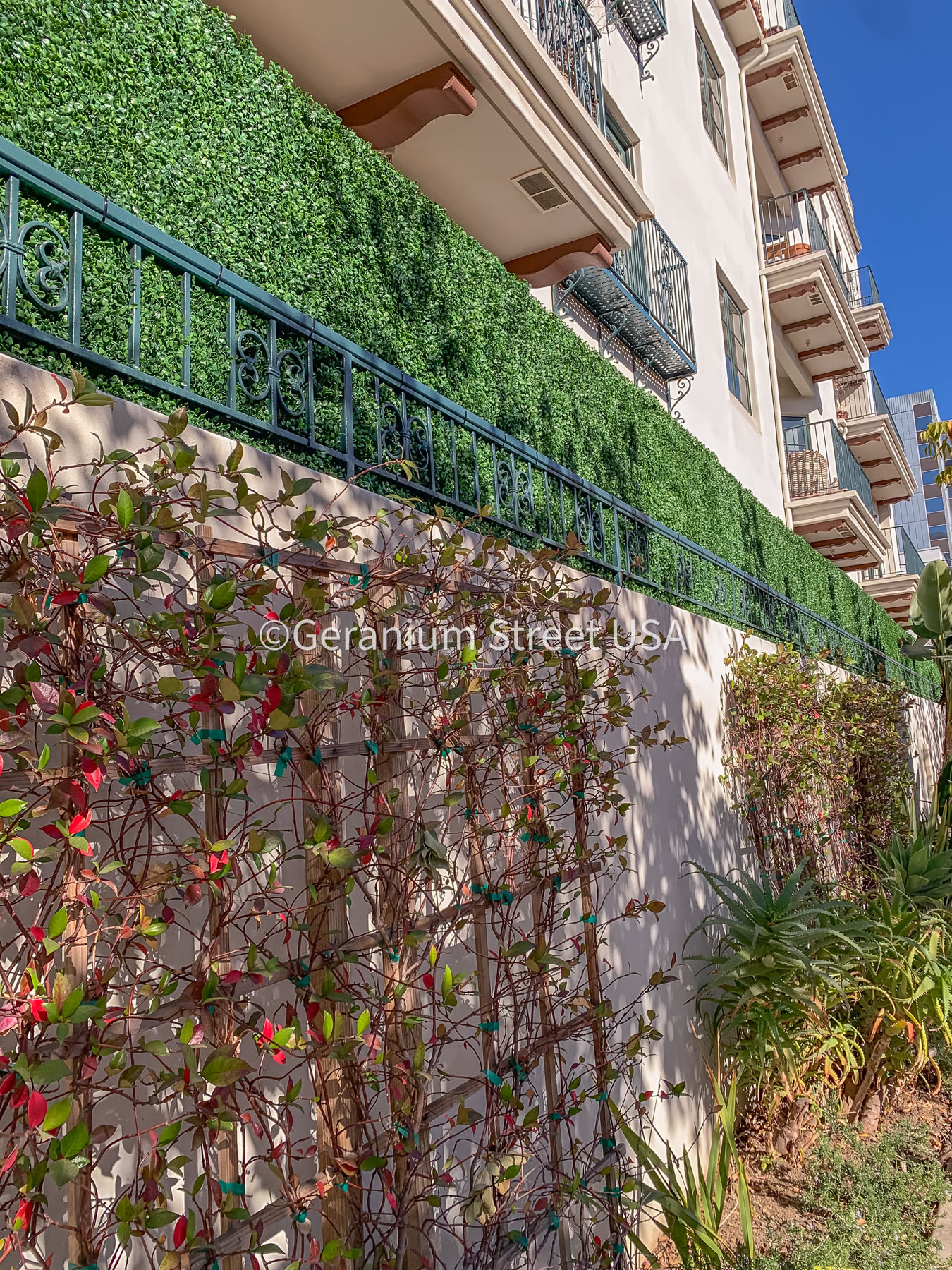
The real options for Texas backyard privacy
If you're looking for backyard privacy in Texas, you have more options than a standard wood fence. Each one has tradeoffs in cost, lifespan, maintenance, and HOA compatibility. This guide compares them side by side so you can pick based on your actual situation — not just what a fence company or landscaper is selling.
The comparison table
Planning a similar project?
Use these next pages while you read
They cover pricing, service details, and the next planning step without making you leave the article blind.
| Wood Fence | Vinyl Fence | Artificial Hedge | Fence Extension | |
|---|---|---|---|---|
| Cost per linear ft | $30–60 (cedar) | $40–85 | Varies by system | Varies by height |
| Lifespan (TX sun) | 15–20 yrs (pine) 20–30 yrs (cedar) |
20–30+ yrs | 5–10 yrs (UV-stabilized) | 5–10 yrs (UV-stabilized) |
| Maintenance | Stain every 2–4 yrs Board replacement |
Minimal (hose rinse) | Minimal (hose rinse) | Minimal (hose rinse) |
| Max height (typical) | 6–8 ft by code | 6–8 ft by code | Any height (custom) | Adds 1–3 ft to existing |
| Permits needed | Usually no (under 8 ft) | Usually no (under 8 ft) | Usually no | Usually no |
| HOA approval | Usually approved | Varies (some ban vinyl) | Usually approved | Usually approved |
| Water use | None | None | None | None |
| Pool-friendly | Rots near moisture | Good | No debris, chlorine-safe | No debris, chlorine-safe |
| Appearance | Weathers / grays | Consistent (plastic look) | Green, natural look | Green, natural look |
| Sound reduction | Some | Minimal | Optional acoustic backing | Optional acoustic backing |
Texas fence height limits by city
Before choosing any privacy solution, know your city's height rules. Going over the limit can mean fines, removal orders, or a failed HOA application.
Planning a similar project? See residential privacy installs → and the San Antonio city page.
Option 1: Wood privacy fence
Best for: New construction, full perimeter enclosure, property line definition.
Wood is the default privacy solution in Texas and for good reason — it's affordable, widely available, and fence contractors are everywhere.
The real costs: Cedar fencing (the most popular in Texas) runs $30 to $60 per linear foot installed. For a typical 150-linear-foot backyard, that's $4,500 to $9,000. Pressure-treated pine is cheaper at $15 to $30 per foot, but it warps and weathers faster in Texas heat.
The catch: Wood fences need staining every 2 to 4 years to maintain appearance and prevent rot. In Texas sun, unstained pine fences can gray and warp within a single summer. Cedar is more durable but still weathers. Budget $500 to $1,500 per staining cycle for a full backyard fence. Over 20 years, maintenance can equal or exceed the original installation cost.
Lifespan: Cedar lasts 20 to 30 years with maintenance. Pressure-treated pine lasts 15 to 20 years. Both numbers assume regular staining and periodic board replacement.
Option 2: Vinyl (PVC) privacy fence
Best for: Low-maintenance perimeter fencing where you don't mind the plastic look.
Vinyl costs more upfront at $40 to $85 per linear foot installed, but it requires almost zero maintenance and lasts 20 to 30+ years.
The tradeoff: Vinyl fences look like vinyl fences. They don't weather like wood (which some people prefer), but they also don't look natural. Some Texas HOAs restrict or ban vinyl fencing for aesthetic reasons. In extreme Texas heat, lower-grade vinyl can warp or become brittle over time.
Option 3: Artificial hedge panels
Best for: Privacy screens, patio walls, pool areas, and anywhere you want a green look without irrigation.
Artificial hedge panels mount on existing structures (fences, walls, frames) or custom-fabricated steel frames. They produce no debris, require no water, and are available with NFPA 701 fire-rated foliage for commercial applications.
Why they're popular for pools and patios: No leaves fall into the pool. No irrigation system runs near the water. No roots crack the deck. UV-stabilized foliage holds its color for 5 to 10 years in full sun.
Where they don't make sense: If you need a full perimeter fence from scratch, artificial hedges alone aren't a fencing replacement — they need a mounting structure. They work best as panels on an existing fence or wall, or on custom frames for specific areas like pool surrounds, patio screens, and side-yard privacy.
Option 4: Artificial hedge fence extensions
Best for: Adding privacy height to an existing fence that's too short.
If you already have a 6-foot fence but can still see your neighbor's second story windows, a fence extension with artificial hedges adds 1 to 3 feet of green privacy without replacing the whole fence.
Why homeowners choose this: It's faster and cheaper than replacing a fence. It doesn't trigger most permit requirements. The green hedge look is generally more HOA-friendly than a taller wood panel. Optional acoustic backing can reduce noise by up to 8 dB.
Which one fits your situation?
The 10-year cost math for a 150 ft backyard
To keep things honest, here's a rough cost comparison over 10 years for a typical 150-linear-foot Texas backyard:
Cedar fence: $4,500–$9,000 install + $2,000–$6,000 in staining (3 cycles) + $500–$1,000 board repairs = $7,000–$16,000 over 10 years
Vinyl fence: $6,000–$12,750 install + ~$0 maintenance = $6,000–$12,750 over 10 years
Artificial hedge on existing fence: Varies by linear footage and height. No ongoing maintenance costs. One-time install, then done.
Fence extension on existing fence: Adds height without replacing the fence. No ongoing maintenance costs. Least total cost if you already have a fence and just need more privacy.
The cheapest 10-year option depends on what you already have. If you're starting from scratch, vinyl or cedar are your full-perimeter options. If you already have a fence and need more privacy or a better look, artificial hedges and extensions skip the ongoing costs entirely.
Related reading
- Artificial hedge fence extensions — add height to your existing fence
- Pool privacy hedges — artificial hedges for pool areas
- Pool living walls — vertical gardens for poolside
- HOA-approved artificial hedges — getting your hedge approved
- Texas Property Code 202.007 and HOA rules — what HOAs can and can't block
Sources
See our artificial hedges and fence extensions pages, or explore installations in Dallas, Houston, San Antonio, Sugar Land, and Frisco.
Need a next step?
Need a real starting number for your project?
Use the pricing page for quick benchmarks, then send dimensions and photos for a tighter range.
Ready for the next step?
Use the page that fits your project best
Pick the shortest path based on whether you need pricing, a service page, or a local planning page.