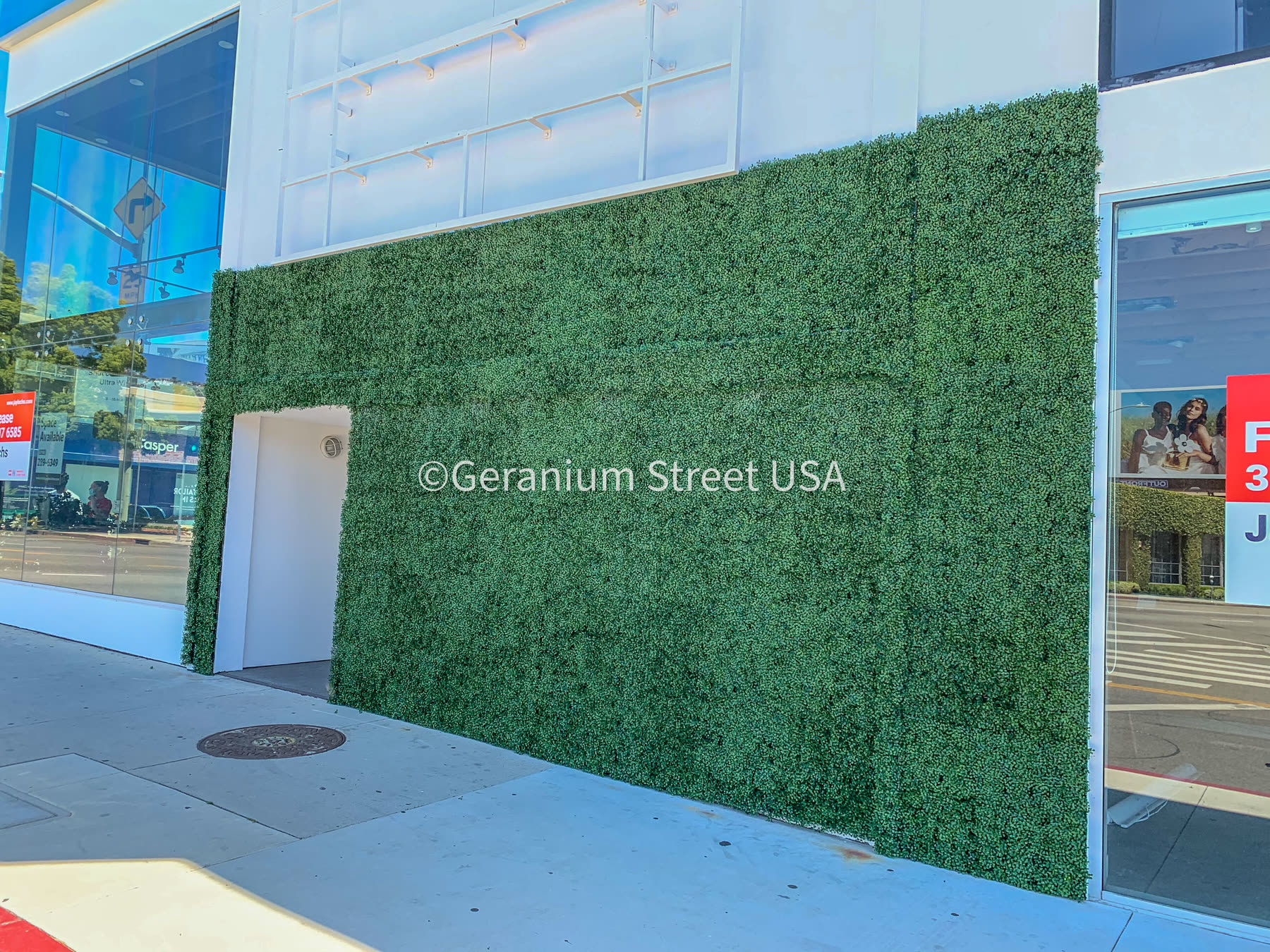
Why restaurants are putting green walls everywhere
Walk through any restaurant district in Dallas, Houston, or San Antonio and you'll notice the same thing: green walls, hedge screens, and living wall backdrops are showing up in patios, dining rooms, and storefronts.
There's a reason. It's not just aesthetics — it's revenue.
Planning a similar project? See fire-rated hedge options → and the Dallas city page.
from patio seating (Simons Advisory Group)
with outdoor dining (NRA)
when dining outdoors (OpenTable)
The National Restaurant Association reports that nearly 7 in 10 customers want an outdoor dining option. Research from the Simons Advisory Group found patio seating can increase gross profits by up to 65%. OpenTable data shows outdoor diners stay about 5% longer and spend about 6% more per visit.
Greenery is what turns a patio from "tables outside" into a space people want to photograph, tag, and come back to. The question for Texas restaurants is whether to use real plants (and take on the maintenance) or artificial green walls (and skip it).
Where artificial green walls work in restaurants
Planning a similar project?
Use these next pages while you read
They cover pricing, service details, and the next planning step without making you leave the article blind.
Why artificial beats real plants for most Texas restaurants
Restaurant operators don't have time for plant maintenance. Here's the practical case:
No irrigation system to manage. A real living wall on a restaurant patio requires a dedicated drip system with controllers, fertigation, and regular monitoring. That's plumbing infrastructure in a space that already has grease traps, gas lines, and drainage to deal with. Artificial panels mount directly to the wall or a simple frame — no plumbing.
No plant replacement budget. Published research shows living walls lose 2 to 12% of their plants annually, even with professional care. In Texas heat with south-facing restaurant patios, replacement rates trend toward the higher end. That's a recurring cost with zero revenue impact.
No pest or mold issues. Real plants attract insects and can develop fungal issues, especially in Houston's humidity. For a food service environment, that's a health inspection risk. Artificial foliage creates no pest habitat and no mold growth medium.
Consistent appearance year-round. A real plant wall in July in Texas looks different from the same wall in February. An artificial wall looks the same on install day, after a July heat wave, and during a January cold snap. For a restaurant brand investing in design consistency, that matters.
No debris near food. Leaves, petals, and soil particles falling near food prep or dining surfaces are a health and cleanliness issue. Artificial foliage produces none.
Fire code: what Texas restaurants need to know
This is the section most people skip and shouldn't.
What NFPA 701 means in practice:
- NFPA 701 tests whether a material self-extinguishes or continues to burn when a flame source is removed
- Method 1 applies to lighter materials (fabrics, films). Method 2 applies to heavier materials like foliage panels
- If your artificial green wall uses NFPA 701 Method 2-tested foliage, you can provide the test documentation to your fire marshal and GC during the permitting process
What we provide: Lone Star Faux Scapes offers NFPA 701 Method 2-rated foliage for all commercial installations. We supply test documentation and can coordinate directly with your GC or fire marshal's office. See our fire-rated artificial hedges page for details.
Real plants and fire: Real plants are not inherently fire-safe either. Dried-out plants, accumulated dead material, and dry growing media can be combustible — especially in Texas heat. The difference is that artificial foliage can be manufactured to a documented fire standard, while real plant fire behavior varies by species, moisture content, and season.
Health department rules for restaurant decor
Good news here. Texas DSHS rules are clear on decorative items:
In plain language: artificial green walls on your patio or dining room walls are fine under Texas health rules, as long as you keep them clean. A periodic rinse or wipe-down during regular cleaning is sufficient. Do not mount artificial foliage on or directly above food preparation surfaces.
What to spec for your project
If you're a restaurant owner, operator, GC, or designer specifying artificial greenery for a Texas project, here's what to include:
- NFPA 701 Method 2 foliage — standard for any commercial dining space. Request test reports.
- UV-stabilized panels — required for any exterior or patio-facing installation. Ask about ASTM G154 testing.
- Mixed-species foliage — single-species uniform panels look obviously artificial. Mixed ferns, grasses, and varied greens read as natural from any distance.
- Hidden mounting hardware — visible brackets and exposed frames undercut the design. Spec concealed attachment systems.
- Logo recess capability — if the wall will feature branding, spec a recess or channel for the logo and any backlighting before fabrication, not after.
- Maintenance access — panels should be removable for cleaning and replacement without demolishing the mounting system.
The bottom line for Texas restaurant operators
A green wall behind your bar or around your patio is a one-time investment that shows up in every guest photo, every Google Maps image, and every social media tag. Real plants require an ongoing maintenance contract, irrigation infrastructure, and plant replacement budget. Artificial panels require a hose rinse twice a year.
For most Texas restaurants — especially patios in Dallas, Fort Worth, Houston, and San Antonio — artificial green walls deliver the design impact without the operational burden.
Related reading
- Commercial artificial green walls — full commercial product page
- Commercial wall covering — facade and cladding solutions
- Fire-rated artificial hedges — NFPA 701 options and documentation
- NFPA 701 vs ASTM E84 fire ratings — detailed fire code comparison
Sources
See our commercial green walls page for project photos, or explore installations in Dallas, Fort Worth, Houston, and San Antonio.
Need a next step?
Need fire-rated options or documentation?
Send the wall size, project type, and timeline. We can tell you when fire-rated foliage or documentation belongs in the scope.
Ready for the next step?
Use the page that fits your project best
Pick the shortest path based on whether you need pricing, a service page, or a local planning page.